If you’re trying to get pregnant, understanding when ovulation happens can help you identify the days when pregnancy is most likely. This guide explains the fertile window, common ways to track ovulation, and when it may be helpful to seek medical advice.
What is ovulation?
Ovulation is when an ovary releases an egg. The egg can then travel into the fallopian tube, where fertilisation may occur. Once released, the egg remains available for fertilisation for a relatively short time.
What is the fertile window?
Sperm can live for up to five days inside the female body, while the egg lives for about a day. So your fertile window is roughly six days: the five days before ovulation and the day of ovulation itself.
The most fertile days are the two days before ovulation and around the time of ovulation. Having intercourse every one to two days during the fertile window can help maximise the chance of conception. You don’t need to identify the exact hour of ovulation.
When do you ovulate?
Ovulation does not always happen on day 14. It commonly occurs around 12–16 days before the next period, although the timing can vary between women and from one cycle to another.
The table below gives a rough estimate based on a 14-day interval between ovulation and the next period:
| Your cycle length | Estimated ovulation day | Estimated fertile window |
| 26 days | Day 12 | Days 7–12 |
| 28 days | Day 14 | Days 9–14 |
| 30 days | Day 16 | Days 11–16 |
| 32 days | Day 18 | Days 13–18 |
These dates are estimates only. Ovulation can occur earlier or later, even in women with generally regular cycles.
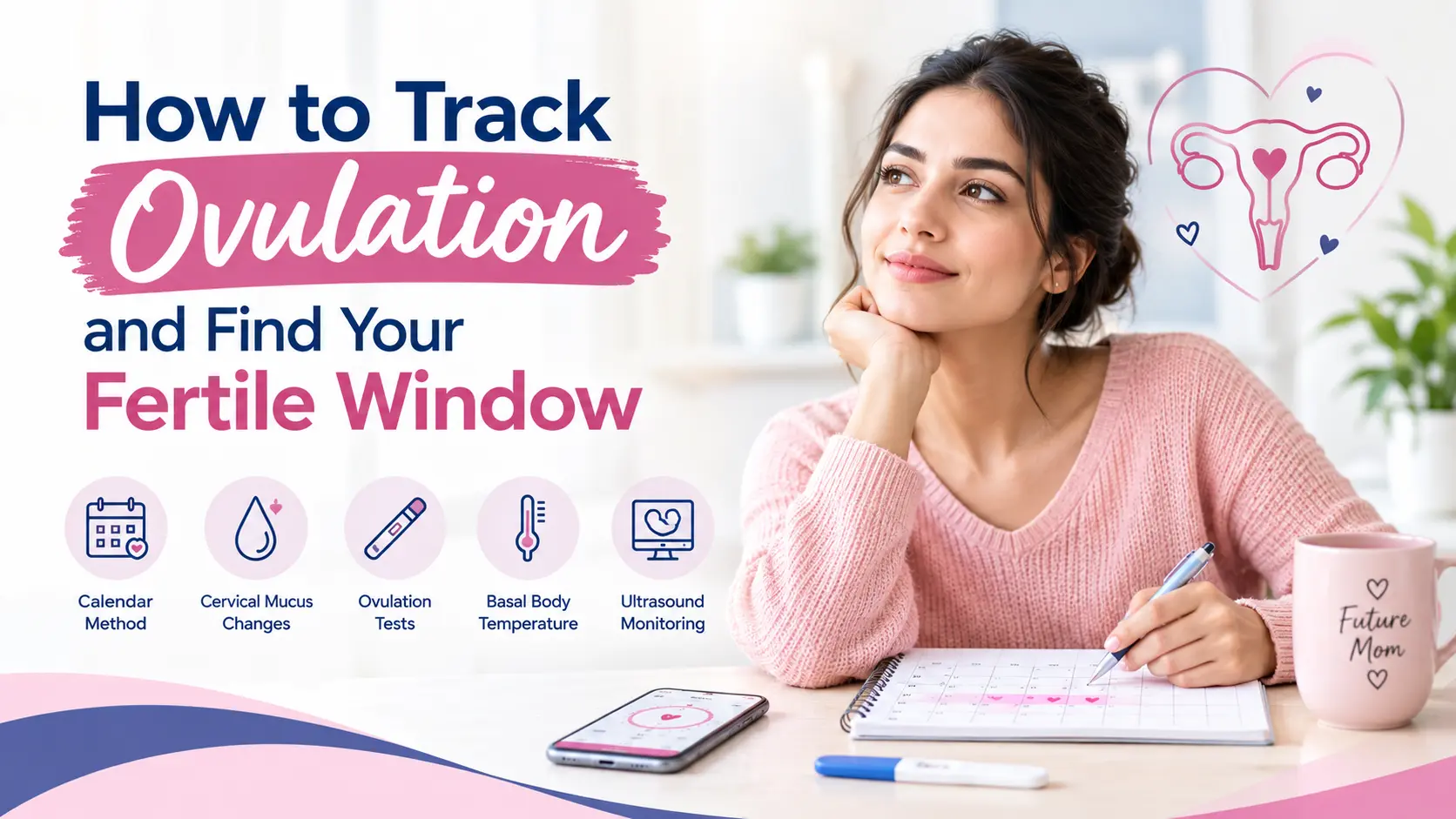
Five ways to track ovulation
1. The calendar method. Record the first day of your period for several months, then work out your average cycle length. It’s simple and free, but it works best when your cycles are regular. It’s the least accurate method if your periods vary.
2. Cervical mucus changes. Around ovulation, the mucus becomes clear, slippery and stretchy, like raw egg white. This is a good sign that you’re in your fertile window. After ovulation it becomes thicker and drier.
3. Basal body temperature (BBT). Your resting temperature rises slightly, by about 0.3 to 0.5°C, after ovulation. Take it with a sensitive thermometer at the same time every morning before getting up. BBT confirms that ovulation has already happened, so it’s best used to learn your pattern over several months rather than to time sex.
4. Ultrasound. Ultrasound scans can be used to monitor the growth of ovarian follicles during the menstrual cycle and help assess when ovulation is approaching. This may be particularly useful for women with irregular cycles or those undergoing fertility treatment.
5. Fertility apps. Period-tracking apps can help you record your cycles and estimate fertile days. However, their predictions are estimates and may be less reliable if your cycles vary
Other signs of ovulation
Some women notice:
- Mild one-sided pelvic pain or cramping (sometimes called mittelschmerz)
- Light spotting
- Breast tenderness
- A higher sex drive
- Slight bloating
These symptoms cannot reliably confirm ovulation, and some women do not notice any symptoms at all.
Tips to improve your chances
Having intercourse every one to two days during the fertile window can help maximise the chance of conception. Women trying to conceive are also generally advised to take folic acid before pregnancy and review any existing medical conditions or regular medications. Avoiding smoking and maintaining overall good health are also important when preparing for pregnancy.
If you’re planning to conceive and would like guidance before pregnancy, a preconception consultation can also help you discuss your medical history, medications, menstrual cycles, and any concerns before you start trying.
When ovulation tracking may not be enough
Tracking ovulation can be more difficult if your periods are irregular, very far apart, or absent. Irregular ovulation may be associated with conditions such as PCOS, thyroid disorders, or other hormonal problems.
If your cycles are irregular, you are unsure whether you are ovulating, or you have concerns about your fertility, our gynecologist can assess your menstrual and medical history and advise whether further evaluation may be helpful.
You can also read more about PCOS symptoms every woman should know and PCOS treatment in Sharjah.
When should you seek fertility advice?
You may want to speak with a gynecologist about fertility assessment if:
- You’re under 35 and have not conceived after 12 months of regular unprotected intercourse
- You’re 35 or older and have not conceived after 6 months
- You’re over 40 and are planning pregnancy
- Your periods are irregular or absent
- You have a condition that may affect fertility, such as endometriosis or a history of pelvic problems
- There are known or suspected fertility concerns affecting either partner
Our fertility clinic in Sharjah offers fertility evaluation and treatment plans tailored to you. You can also read about what to look for in an infertility clinic in Sharjah and learn about our obstetrician-gynecologist, Dr. Reeta Kumar.
Frequently asked questions
Can I get pregnant outside my predicted fertile window?
Yes. Ovulation can happen earlier or later than expected, particularly if your cycles are irregular, so a predicted fertile window is only an estimate.
Should both partners get checked?
Yes. Male factors contribute to fertility problems in many cases, so assessment for both partners is often recommended.
Is mid-cycle spotting normal?
Light spotting can sometimes occur around ovulation. However, recurrent, heavy, or unusual bleeding should be assessed by the doctor.
Book a Fertility Consultation in Sharjah
If you’re planning to conceive, have irregular cycles, or have been trying to get pregnant without success, a consultation can help you better understand your cycle and discuss any concerns.
At Lifeway Specialized Medical Centre in Taawun, Al Mamzar, Sharjah, our gynecologist provides preconception and fertility consultations based on your individual needs.
Trying to conceive and need guidance? Contact our clinic by phone or WhatsApp to book a consultation.
This article is for general information only and isn’t a substitute for professional medical advice.