If your dentist has recommended a dental crown, you may be wondering what it is, why it’s needed, and what to expect during treatment. Dental crowns are commonly used to restore damaged or weakened teeth, helping protect them while improving their appearance and function.
This guide explains when a dental crown may be recommended, the different types available, what the procedure involves, and what you can expect during recovery. If you’re considering a Dental Clinic in Sharjah for crown treatment, understanding your options can help you make an informed decision.
What Is a Dental Crown?
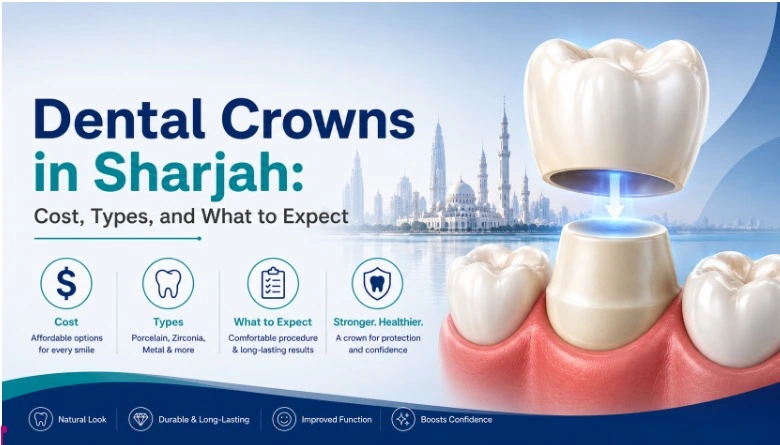
A dental crown is a custom-made “cap” that fits over a damaged, weakened, or heavily decayed tooth, restoring its shape, size, strength, and appearance. It acts as a protective shell, covering the entire visible part of the tooth down to the gumline.
Crowns are one of the most common restorative dental treatments because they can protect a weakened tooth, improve its appearance, and restore normal biting and chewing function.
Signs You Might Need a Dental Crown
Not sure if a crown is the right treatment for you? It may be recommended if you have:
- A cracked or fractured tooth — crowns hold the tooth together and prevent the crack from worsening
- A large filling that’s failing — when there isn’t enough natural tooth left to support a new filling, a crown covers and reinforces it
- A tooth after root canal treatment — root canal–treated teeth become brittle over time and need a crown for long-term protection
- Severe decay — when a cavity is too large for a filling alone
- Significant discoloration or misshapen teeth — for cosmetic cases where veneers aren’t suitable
- A worn-down tooth from grinding (bruxism)
If any of this sounds familiar, a dental consultation is the best next step to confirm whether a crown, filling, or another treatment is right for you.
Common Types of Dental Crowns
Not all crowns are the same. The right type for you depends on the tooth’s location, your bite, budget, and aesthetic goals.
Porcelain / Ceramic Crowns
The most natural-looking option, closely matching the color and translucency of your surrounding teeth. Popular for front teeth where appearance matters most.
Porcelain-Fused-to-Metal (PFM) Crowns
Combines a metal base for strength with a porcelain outer layer for a natural look. A durable, cost-effective middle ground, often used for molars.
Zirconia Crowns
Extremely strong and increasingly popular — zirconia offers both durability and a good aesthetic finish, making it suitable for both front and back teeth.
Metal Crowns (Gold or Alloy)
The most hard-wearing option, typically reserved for back molars where chewing force is highest and appearance is less of a priority.
Our dentist will recommend the type that best balances strength, appearance, and cost for your specific tooth.
The Dental Crown Procedure: What to Expect
Dental crowns are usually completed over two visits.
Visit 1 — Preparation
- The tooth is numbed with local anesthesia.
- The dentist reshapes the tooth, removing a thin layer of enamel to make room for the crown.
- If there’s significant decay or damage, a filling material may be used to rebuild the tooth’s core first.
- An impression (physical mold or digital scan) is taken of your tooth and bite.
- A temporary crown is placed to protect the tooth while your permanent crown is custom-made.
Between Visits
Your permanent crown is crafted in a dental lab to match your tooth’s shape, size, and color — this typically takes one to two weeks.
Visit 2 — Fitting
- The temporary crown is removed.
- The dentist checks the fit, bite, and color of the permanent crown.
- Once everything is confirmed, the crown is cemented into place.
- Minor adjustments are made so your bite feels natural.
Most patients feel little to no discomfort during the procedure thanks to local anesthesia, and any mild sensitivity afterward usually settles within a few days.
How Long Do Dental Crowns Last?
With good oral hygiene and regular dental checkups, a well-fitted crown can last 10 to 15 years, and often longer. Lifespan depends on:
- The material used (zirconia and metal crowns tend to outlast porcelain)
- How well you maintain oral hygiene
- Whether you grind your teeth (a nightguard can help protect the crown)
- Regular dental checkups to catch any issues early
Caring for Your Crown
- Brush twice daily and floss gently around the crown margin
- Avoid biting down on very hard foods (ice, hard candy, bone) with the crowned tooth
- Wear a nightguard if you grind your teeth
- Keep up with routine checkups so your dentist can monitor the crown and surrounding gum health
Dental Crown Cost in Sharjah
The cost of a dental crown varies depending on the material used, the condition of the tooth, and whether additional treatment, such as a root canal, is required beforehand.
At Lifeway Specialized Medical Centre, we believe in transparent pricing. Following an examination, our dentist will discuss the most suitable treatment options and provide a clear quotation before treatment begins.
Frequently Asked Questions
Does getting a dental crown hurt? No — the procedure is done under local anesthesia, so you shouldn’t feel pain during treatment. Mild sensitivity for a few days afterward is normal.
Can a crown be placed on any tooth? Yes, crowns can be used on both front and back teeth, though the material recommended may differ based on location and appearance needs.
What’s the difference between a crown and a veneer? A veneer covers only the front surface of a tooth and is mainly cosmetic, while a crown covers the entire tooth and is used when more structural support is needed. If your main concern is improving the appearance of otherwise healthy teeth, our cosmetic dentistry page covers veneers, smile design, and teeth whitening in more detail.
Do I need a root canal before getting a crown? Not always. A root canal is only needed if the tooth’s nerve is infected or damaged. Many crowns are placed on teeth that simply need structural reinforcement.
Is it normal for a temporary crown to feel loose? Temporary crowns are designed to come off between visits, so slight looseness is normal. However, if it falls out completely or causes pain, please contact us for further advice.
Considering a Dental Crown?
If you’re experiencing tooth pain, have a cracked tooth, or have been advised that you may need a dental crown, a dental examination can help determine the most appropriate treatment.
At Lifeway Specialized Medical Centre, our dentist will assess your tooth, discuss your treatment options, and recommend the most suitable solution to restore your smile and protect your natural tooth.
📍 Lifeway Specialized Medical Centre, Al Mamzar, Sharjah
📞 Book your dental consultation today.
Serving patients across Al Mamzar, Al Taawun, Al Nahda, Al Khan, Al Majaz, Rolla, Abu Shagara, Muwaileh, Mirdif, and nearby Dubai communities.0