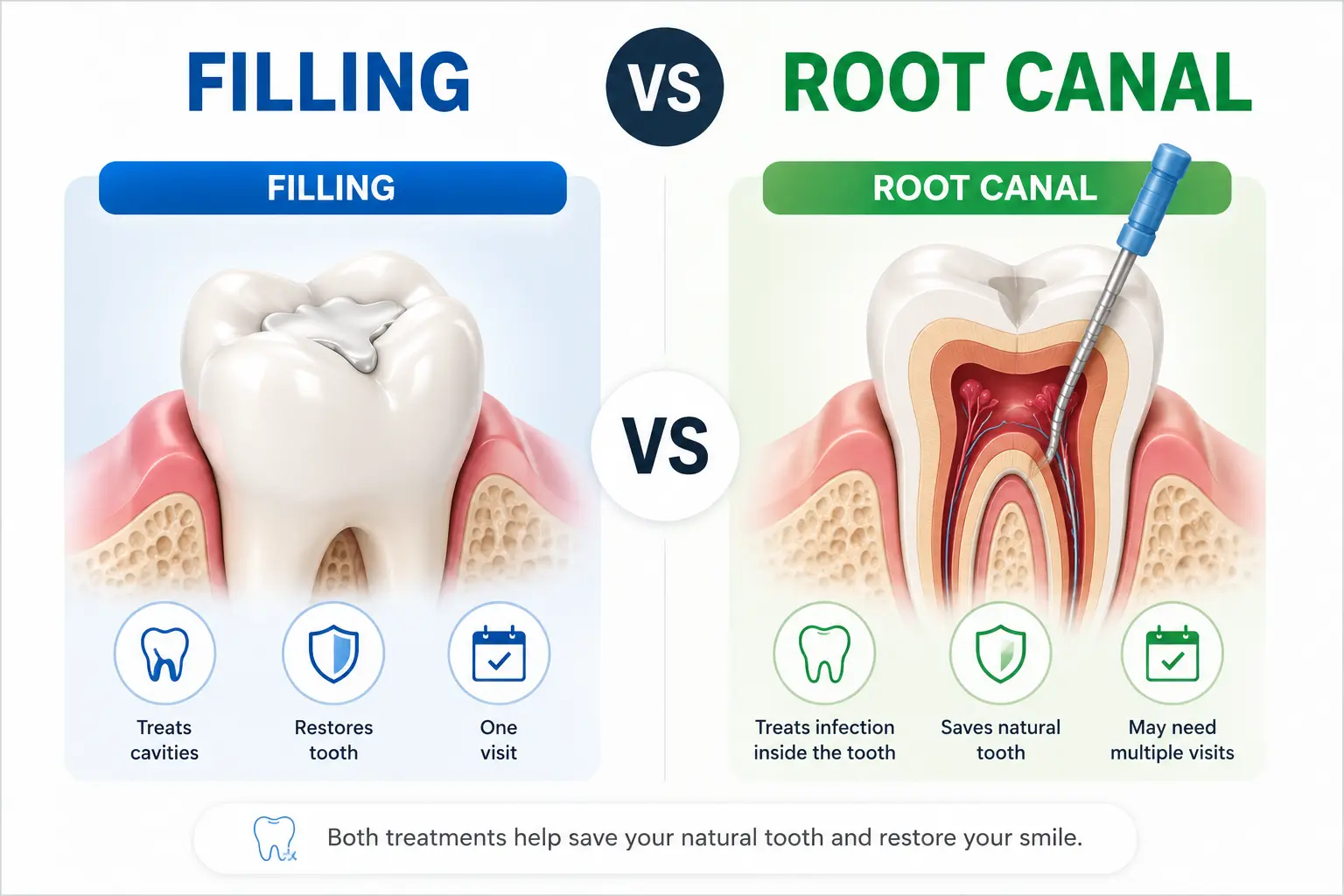
Dental problems can cause discomfort, sensitivity, and pain, but not every tooth issue requires the same type of treatment. In many cases, a small cavity can be treated with a simple dental filling. However, if decay or infection spreads deeper into the tooth, root canal treatment may become necessary.
Many patients are unsure whether their symptoms require a filling or a root canal. Understanding the differences between these treatments can help you recognize symptoms early and seek appropriate care before the problem becomes more serious.
If you are experiencing tooth pain, sensitivity, or signs of decay, visiting a trusted Dental Clinic in Sharjah can help determine the most appropriate treatment for your condition.
What Is a Dental Filling?
A dental filling is a restorative treatment used to repair a tooth affected by minor to moderate decay. When a cavity develops, the damaged portion of the tooth is removed and replaced with a filling material such as composite resin, ceramic, or amalgam.
The purpose of a filling is to:
- Stop tooth decay from progressing
- Restore the tooth’s shape and function
- Prevent further damage
- Protect the tooth from bacteria
Dental fillings are generally recommended when decay has not reached the inner pulp of the tooth.
What Is Root Canal Treatment?
Root canal treatment is a procedure used to treat infection or severe damage inside a tooth. The treatment involves removing infected or inflamed pulp tissue from the center of the tooth, cleaning and disinfecting the root canals, and sealing the tooth to prevent reinfection.
Patients requiring Root Canal Treatment in Sharjah often experience symptoms indicating that the infection has reached the tooth’s pulp or nerve tissue.
The goal of root canal treatment is to save the natural tooth while eliminating infection and pain.
Understanding Tooth Structure
To better understand the difference between a filling and a root canal, it helps to know the basic structure of a tooth.
A tooth consists of an outer protective layer called enamel, a layer beneath it called dentin, and an inner pulp containing nerves and blood vessels. If decay remains in the outer layers, a filling may be sufficient. However, if it reaches the pulp, root canal treatment may be required.
When Is Dental Filling Needed?
A dental filling is usually recommended when:
- A cavity is detected early
- Tooth decay is limited to the outer layers of the tooth
- Minor chips or cracks are present
- There is no infection in the tooth pulp
In many cases, early cavities cause little or no pain, which is why regular dental check-ups are important.
When Is a Root Canal Needed?
Root canal treatment becomes necessary when the pulp inside the tooth becomes infected or severely inflamed. This usually occurs when tooth decay or damage has progressed deeper into the tooth.
Common Causes
- Deep untreated cavities
- Severe tooth decay
- Cracked or fractured teeth
- Repeated dental procedures on the same tooth
- Dental trauma
Common Signs You May Need a Dental Filling or Root Canal
You may need a dental filling if you have:
- Mild sensitivity to sweets or cold drinks
- A small cavity detected during a check-up
- Minor discomfort that comes and goes
- Little or no pain
You may need root canal treatment if you have:
- Persistent or severe tooth pain
- Pain that keeps you awake at night
- Swelling around the tooth or gums
- Prolonged sensitivity to hot or cold
- A dental abscess or pimple on the gums
If you are unsure, booking a dental consultation can help determine the cause of your symptoms and the most appropriate treatment. Only a dental examination can determine whether a tooth requires a simple filling or root canal treatment.
Dental Filling vs Root Canal: Key Differences
| Dental Filling | Root Canal | |
| Purpose | Repairs minor tooth decay and restores tooth structure | Treats infection within the tooth pulp and preserves the natural tooth. |
| Severity of Damage | Mild to moderate cavities | Deep infection |
| Number of visits | Usually completed in a single appointment. | May require one or more visits |
| Pain level | Mild discomfort | Performed under local anesthesia to relieve pain |
| Cost | Lower | Higher, as it is a more complex procedure. |
Can a Filling Turn Into a Root Canal?
Yes. A small untreated cavity can gradually progress deeper into the tooth and eventually infect the pulp, leading to the need for root canal treatment. This is why dentists encourage early treatment and regular dental check-ups.
How Do You Know Which Treatment You Need?
A dental examination is the best way to determine whether a tooth can be treated with a simple filling or requires root canal treatment.
Our dentist will assess your symptoms, examine the affected tooth, and recommend the most appropriate treatment based on the extent of the damage.
Why Early Treatment Matters
Seeking treatment early offers several benefits:
Prevents Severe Damage
Early intervention stops decay before it spreads deeper into the tooth.
Reduces Treatment Costs
A simple filling is often less expensive than more extensive treatment.
Preserves Natural Teeth
Timely treatment helps maintain healthy tooth structure.
Reduces The Risk Of Infection
Addressing cavities early may help prevent painful infections and dental abscesses.
How to Prevent Cavities and Root Canal Treatment
Maintaining good oral hygiene can significantly reduce the risk of dental problems.
- Brush Twice Daily
- Floss Every Day
- Limit Sugary Foods
- Schedule Regular Check-Ups
- Professional Dental Cleaning
Routine visits to a Dentist in Sharjah and regular professional cleanings can help remove plaque and tartar and help identify problems early.
Don’t Ignore Tooth Pain or Sensitivity
Understanding the difference between a dental filling and a root canal can help you recognize symptoms early and seek treatment before a minor problem becomes more serious. In many cases, early tooth decay can be treated with a simple filling, while delaying treatment may allow the infection to spread deeper into the tooth and require more extensive treatment.
If you are experiencing tooth pain, sensitivity, discomfort while eating, or signs of tooth decay, a dental examination can help determine the most appropriate treatment.
At Lifeway Specialized Dental Clinic in Sharjah, our dentist will assess your symptoms, examine the affected tooth, and recommend the most suitable treatment to help relieve discomfort and preserve your natural teeth.