Cavities are one of the most common dental problems affecting people of all ages. If detected early, they can often be treated quickly and effectively with a simple dental filling. However, when left untreated, cavities may progress deeper into the tooth, leading to pain, infection, and the need for more extensive treatment.
Understanding the early signs of cavities can help you seek timely dental care and protect your oral health. In this guide, we explain the warning signs of tooth decay, when a dental filling may be needed, and why early treatment is important.
Early Signs of Cavities
Many cavities develop without causing noticeable pain during the early stages. This is why routine dental examinations are essential.
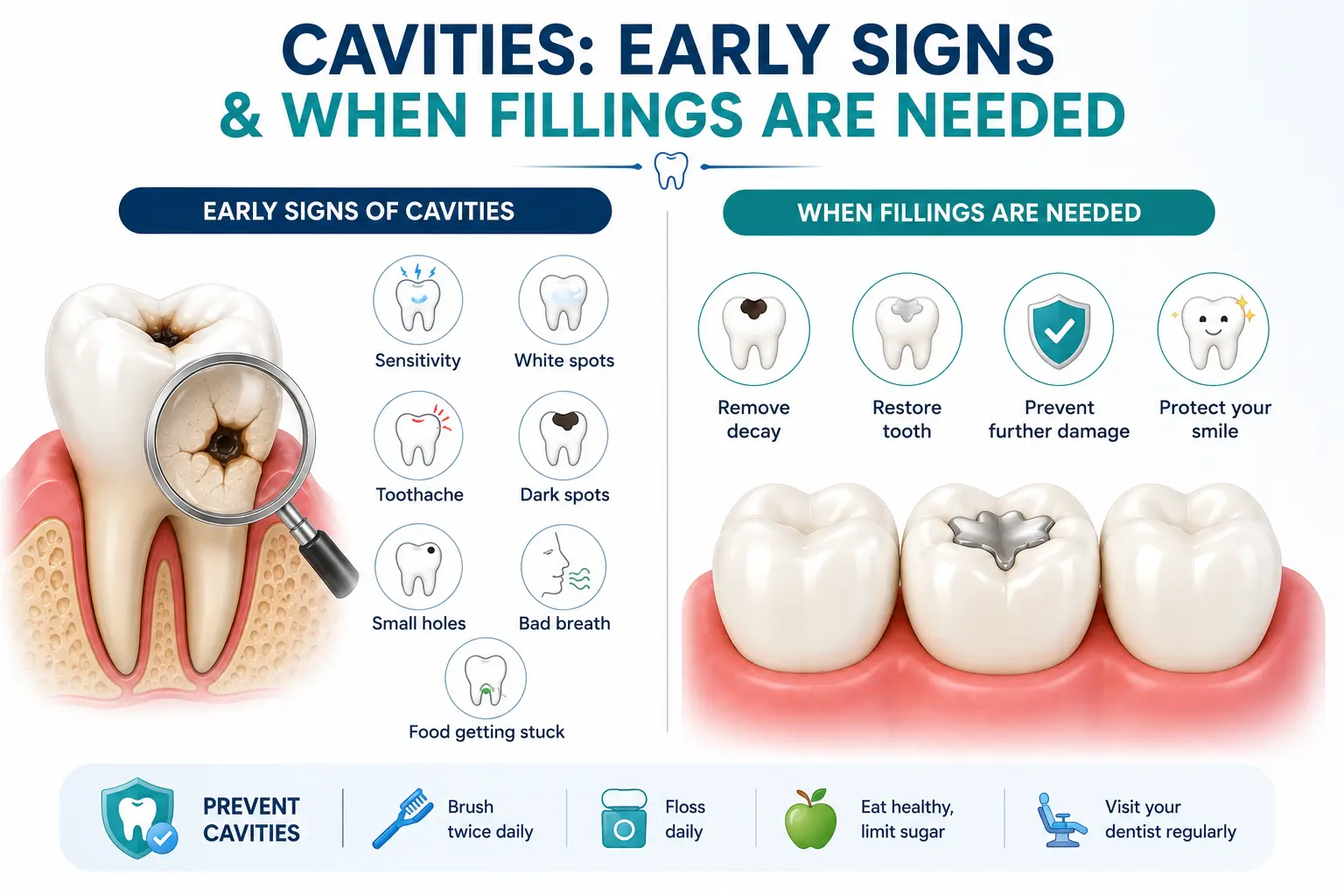
1. Tooth Sensitivity
One of the earliest warning signs is increased sensitivity when consuming:
- Hot beverages
- Cold drinks
- Sweet foods
- Acidic foods
Mild sensitivity may indicate that the enamel is beginning to weaken.
2. White Spots on Teeth
White chalky spots often appear before a visible cavity forms. These spots indicate mineral loss from the enamel and may be reversible if treated early.
3. Mild Toothache
Occasional discomfort or mild pain may occur when eating certain foods. Although not always severe, recurring toothaches should never be ignored.
4. Visible Dark Spots
Brown, black, or dark spots on a tooth may indicate early decay. These areas should be evaluated by a dentist as soon as possible.
5. Small Holes or Pits
As cavities progress, tiny holes may become visible on the tooth surface. These areas often trap food and bacteria, accelerating decay.
6. Bad Breath
Persistent bad breath may sometimes be linked to cavities and bacterial buildup in the mouth.
7. Food Frequently Getting Stuck
If food repeatedly becomes trapped in a specific area of the mouth, it may indicate a developing cavity or damaged tooth structure.
What Are Cavities?
Cavities, also known as tooth decay, develop when plaque, bacteria, sugars, and acids gradually damage the tooth enamel and create small areas of decay in the teeth.
Without treatment, cavities can continue to progress and affect the deeper layers of the tooth, leading to pain, infection, and the need for more extensive treatment. Regular visits to a trusted Dental Clinic in Sharjah can help identify cavities early before they become more serious.
How Do Cavities Develop?
Cavity formation usually occurs gradually:
- Plaque forms on the teeth
- Bacteria produce acids that damage the enamel
- The enamel becomes weakened
- A cavity develops
When Is Dental Filling Needed?
A dental filling is recommended when tooth decay has damaged part of the enamel or dentin but has not yet reached the tooth’s inner pulp.
Dental fillings help:
- Remove decayed tooth material
- Restore tooth structure
- Prevent further damage
- Preserve natural teeth
The earlier a cavity is treated, the simpler the procedure usually is.
When Should You See a Dentist?
You should consider booking a dental appointment if you notice:
- Tooth sensitivity that does not improve
- White, brown, or black spots on a tooth
- Pain when eating or drinking
- Food frequently getting stuck in the same area
- A visible hole or rough area on a tooth
Early treatment can often prevent the cavity from progressing and may reduce the need for more extensive dental treatment.
What Happens During a Dental Filling Procedure?
The procedure is typically straightforward and comfortable.
- Examination of the affected tooth
- Removal of the decayed portion of the tooth
- Cleaning of the area to remove bacteria and debris
- Placement of the filling material
- Polishing of the filling
Many fillings can be completed in a single visit, and most patients return to their normal activities immediately afterwards.
What Happens If Cavities Are Not Treated?
Ignoring cavities can allow decay to spread deeper into the tooth.
Potential complications include:
Larger Cavities
The longer treatment is delayed, the more tooth structure may be lost.
Severe Pain
Decay reaching the inner layers of the tooth can cause significant discomfort.
Root Canal Treatment
When infection reaches the pulp, patients may require Root Canal Treatment in Sharjah to save the tooth.
Infection
Untreated cavities can lead to bacterial infection within the pulp.
Abscess Formation
Dental abscesses may develop and require urgent treatment.
How to Prevent Cavities
Good oral hygiene and regular dental visits can significantly reduce the risk of cavities and help detect problems before they become more serious.
- Brush Twice Daily
- Floss Daily
- Limit Sugary Foods And Drinks
- Regular Dental Check ups
- Professional Dental Cleaning
Benefits of Early Cavity Treatment
Preserves Natural Teeth
Early treatment helps protect healthy tooth structure.
Prevents More Expensive Procedures
Fillings are generally less costly than advanced restorative treatments.
Reduces Pain and Discomfort
Addressing decay early prevents worsening symptoms.
Improves Long-Term Oral Health
Healthy teeth and gums contribute to overall well-being.
Why Early Treatment Matters
Many early cavities cannot be seen or felt, which is why regular dental check-ups are important. Routine dental visits help identify tooth decay early, provide preventive treatment, and reduce the risk of more extensive dental procedures in the future.
Cavities often begin with subtle warning signs such as sensitivity, white spots, mild discomfort, or visible discoloration. Recognizing these symptoms early and seeking prompt treatment can help prevent more serious dental problems and preserve your natural teeth.
Dental fillings are an effective way to treat early to moderate tooth decay before it progresses deeper into the tooth and requires more extensive treatment. If you have noticed signs of a cavity or it has been more than six months since your last dental visit, scheduling an appointment with a Dentist in Sharjah can help identify problems early and determine whether a simple filling is needed.
At Lifeway Specialized Medical Centre, a trusted Dental Clinic in Sharjah, our dentist provides comprehensive dental examinations and personalized treatment recommendations to help protect your teeth and prevent more extensive treatment in the future.